Home and Away Basketball Uniforms: How to Plan a Complete Set
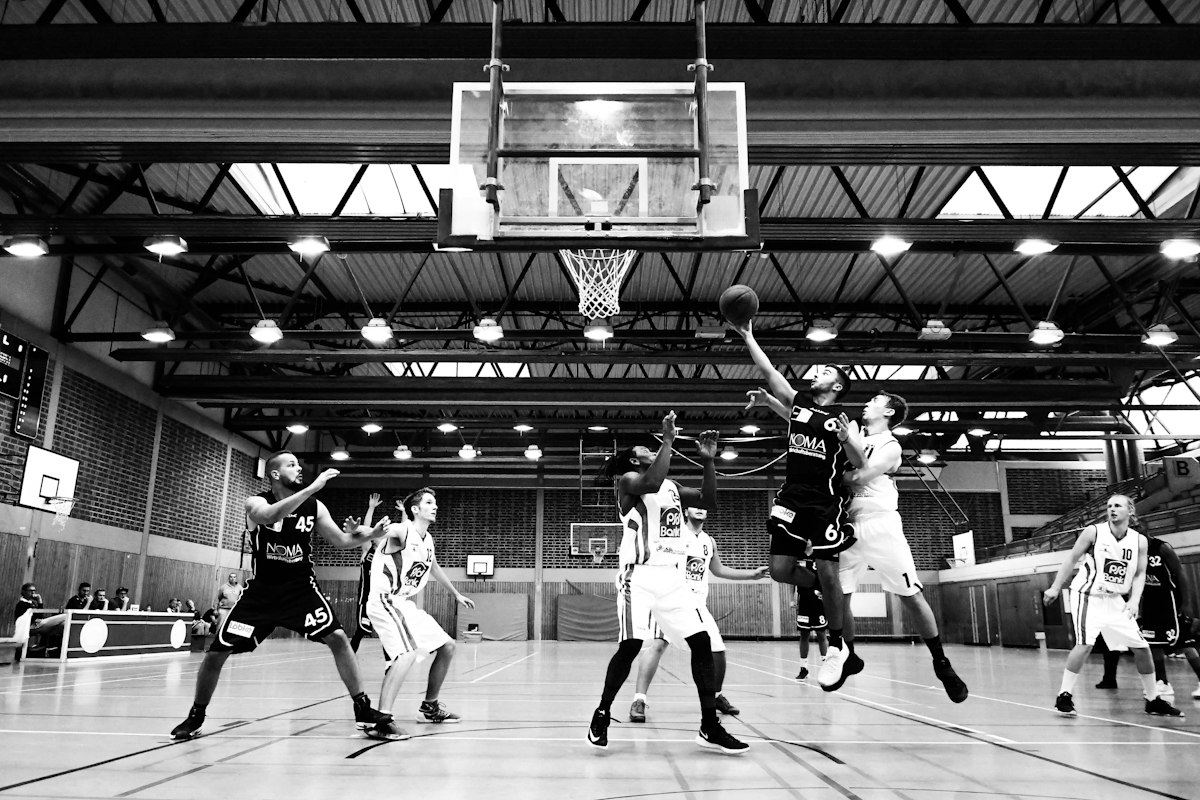
A basketball team rarely needs just one uniform. Most leagues expect a light set and a dark set so that two teams can always be told apart, and the two sets have to look like they belong to the same club. Teams that plan both at once when ordering custom basketball uniforms usually end up with a stronger identity and fewer problems than teams that add a second set later.
Quick answer: Plan the home and away uniforms together. Use one design in two colourways, make sure one set is clearly light and the other clearly dark, keep each player on the same number in both sets, and order jerseys and shorts as a matched pair so colours stay consistent.
Why do teams need a light and a dark uniform?
Referees, scorers and spectators need to separate the two teams at a glance. For that reason most competitions ask one team to wear a light colour, often white, and the other to wear a dark colour. Which team wears which is set by the league, and it is not the same everywhere, so read your competition rules before you decide which set is your main one.
A club that only owns one mid-tone uniform can run into trouble when an opponent wears something similar. Two clearly different sets remove that risk for the whole season.
How do you make two sets look like one team?
The simplest approach is to create one design and reverse the colours. If the dark set is navy with gold trim and white numbers, the light set can be white with navy trim and gold accents. The side panels, neckline shape, wordmark and number font stay the same, so the two uniforms read as a pair.
Sublimation makes this easier because both colourways are printed from the same artwork file with the colours swapped. Stripes, patterns and logos land in the same place on both sets, which is hard to achieve when pieces are cut and sewn from different coloured fabrics.
What details should match across both sets?
Consistency is what makes a club look organised. Before approving artwork, confirm that these points are identical on the light and dark versions:
- Number font, size and position on the front and back
- Team name or wordmark style and placement
- Logo size on the jersey and on the shorts
- Trim width at the neck, armholes and hem
- Sponsor logo position, if you have one
- Each player's number, so nobody changes number between home and away games
Pay special attention to contrast. A number that stands out on the dark set may fade into the background on the light set unless its colour or outline is adjusted.
Should shorts be ordered with the jerseys?
Yes, whenever possible. Shorts ordered at a different time, or from a different source, can differ slightly in shade. On court, under bright lights, that difference is easy to see. Ordering jerseys and shorts together means they are printed in the same run and the colours match.
Think about the shorts design as part of the uniform, not an afterthought. Side panels that continue the line of the jersey, a small logo on the leg and a waistband in the trim colour all help the kit look finished. Check the inseam length on the size chart too, because preferences vary a lot between age groups.
How many uniforms should a team order?
Start with the confirmed roster and add spares. Players join mid-season, sizes are sometimes wrong and jerseys go missing. A few blank or pre-numbered extras in common sizes save a rushed reorder later. Keep a simple record of which number is assigned to which player and which numbers are held in reserve.
It also helps to ask the manufacturer whether your artwork is kept on file. If it is, adding two or three uniforms next season is straightforward and the new pieces will match the originals.
Frequently asked questions
Does the home team always wear white?
No. The rule differs between leagues and levels, so check your own competition handbook.
Can the away uniform use a different design?
It can, but most clubs find that one design in two colourways builds a stronger and more recognisable identity.
Is a reversible uniform a substitute for two sets?
For training groups and recreational leagues it often is. Competitive teams usually prefer two separate sets.
Key takeaways
- Plan the light and dark uniforms together, not one after the other
- Use one design in two colourways and check number contrast on both
- Order jerseys and shorts in the same run so colours match
- Add spare uniforms and keep a record of assigned numbers
Final thoughts
A well planned pair of uniforms makes a team look prepared before the ball is even tipped. Agree on the design once, apply it to both colourways and order everything in one go. Stitch Next, a sportswear manufacturer based in Sialkot, Pakistan, makes sublimated team uniforms to order, and its page for custom basketball uniforms shows the jersey and shorts options available for a full home and away set.